Tag pentane

Where can I buy Pentane?

Junyuan Petroleum Group is the largest n-Pentane manufacturer in China
Pentane is mainly used in molecular sieve desorption and replacing freon as foaming agent, as solvent, and in the manufacture of artificial ice, anesthetic, synthetic pentanol, isopentane, etc. Packaging in steel drums: 125kg/drum or 14.7 MT per ISO Tank
Buy Pentane (C5H12) Online Here Or By Phone If you have questions about ordering pentane (n-Pentane) online at Junyuanpetroleumgroup.com or would like to place an order, call +8617810300898 or email info@junyuanpetroleumgroup.com to talk with a Pentane Specialist.


Pentane 80/20 for EPS / LLDPEmanufacturers, procucers and suppliers

25-JAN-21, the prices of pentane and pentane foaming agent products rose collectively today. 

25-JAN-21, The prices of pentane and pentane foaming agent products rose collectively today. 
n-Pentane, 95% (↑+1.49%)
n-Pentane, 99% (↑+1.30%)
Isopentane, 95% (↑+1.27%)
Isopentane, 99% (↑+1.13%)
Blend n-/Isopentane (80 – 20%) (↑+1.46%)
Blend n-/Isopentane (70 – 30%)(↑+1.46%)
Blend n-/Isopentane (60 – 40%)(↑+1.46%)
Blend n-/Isopentane (20 – 80%)(↑+1.49%)
Blend Iso/n-Pentane (30 – 70%)(↑+1.49%)
Blend Iso/n-Pentane (40 – 60%)(↑+1.49%)

Friday, 22-JAN-22: No change in prices of Pentane, Hexane and Heptane series

Friday, 22-JAN-22: There was no change in prices of Pentane, Hexane and Heptane series products today.

For products with small orders, we can provide you with flexitank packaging. The advantages of packaging are as follows: 1. Convenient loading and unloading, door-to-door service, and multimodal transport such as highway, railway and waterway can be adopted. 2. A wide range of suitable chemical varieties. 3. Convenient transshipment, suitable for multimodal transport.

What is a Flexitank?

The Flexitank is a package that is used for the storage and transportation of non-hazardous liquid products and is intended for installation in 20ft ISO shipping containers.

Using Flexitank will reduce packaging, storage and transportation costs by a sizeable margin. This is due to its relatively low unit cost and the convenience of positioning ,speed of loading and efficient exploitation of loading weights.

Very Low positioning costs
No cleaning costs,No disposal costs
Cost effective and considerably cheaper than tank containers,drums and IBC’S
Can carry 40% or more cargo than drum and 50% or more than by bottles
Deliveries are door- to- door • Quick loading compared to drums and IBCs
Low labour for handling,filling and loading
No need for forklift to load or unload container
No need for intermediate bulk storage
Available in remote areas
Clean and environmentally friendly
Low weight of Flexitank-so higher payloads possible
20 ft. Container payload 15% higher than IBCs Container payload 44% higher than drums
No demurrage on Flexitank only on container.No return loads needed

The latest global polyethylene pipe Research Report: China has become the world’s largest polyethylene pipe market

According to the latest global polyethylene pipe research report released by Freedonia group, China’s total demand for polyethylene pipe in 2019 was 4.2 million tons, accounting for 33% of global demand and 59% of regional sales, which is the largest market in the world so far.

The research report points out that China’s agriculture, construction, manufacturing, oil and gas and public utilities have a large volume, and plastic pipelines are needed in these fields. In addition, China’s diversified processing and manufacturing industries, including chemical industry, food processing, primary metals, pulp, paper and textiles, also need plastic pipes.

The scale of China’s construction industry is almost four times that of the United States, and the sales volume of polyethylene pipes is about three times that of the United States. China’s infrastructure investment continues to make great progress, and the proportion of product sales in the population is almost twice the global average.

The report predicts that by 2024, the global demand for polyethylene pipes will increase at an annual rate of 3.7% to 15.3 million metric tons, which is due to the increasing use of polyethylene pipes in all markets. Among them, HDPE pipes will also maintain healthy growth because they are more popular than other materials in water treatment and sewer applications.

Demand will be driven by polyethylene’s versatility, easy processability, low cost, and recyclability; by new ethylene feedstocks; and by improved polymerization catalyst technologies.

World demand to rise 4.0% annually through 2018

Global demand for polyethylene resins will rise 4.0 percent per year to 99.6 million metric tons in 2018, valued at $164 billion. Gains will match overall world economic growth, fueled by an acceleration in consumer spending and manufacturing activity. Polyethylene will continue to be the most widely used plastic resin in the world, benefiting from its versatility, easy processability, low cost, and recyclability. The development of ethylene feedstocks from new sources such as shale gas, coal, and biobased materials will also give polyethylene a price advantage over other plastic resins. Moreover, continually improving polymerization catalyst technologies will enhance the performance, customization, and yield of polyethylene resins. Further increases will be limited, however, by the highly commoditized and mature position of polyethylene. Additionally, major polyethylene applications such as plastic bags have increasingly become subject to environmental regulations and bans.

Asia/Pacific region to remain largest, fastest growing market

The Asia/Pacific region will continue to be the largest and fastest growing polyethylene market through 2018, fueled by strong growth in China, which alone accounted for nearly one-quarter of global demand in 2013. India and Vietnam will also be among the world’s most rapidly expanding markets. However, advances in most emerging Asian countries will rise at a slower pace than during the 2008-2013 period. On the other hand, North America will see a significant improvement in polyethylene demand, while the markets in Western Europe and Japan will rebound from recent declines.

LLDPE to gain market share over LDPE

View Post

HDPE is the most widely used of the three polyethylene resins, accounting for just under half of total demand in 2013. Above average growth is expected for HDPE through 2018, driven by its rising use in construction products such as pipe and the increasing popularity of blow-molded HDPE containers in emerging market countries. LLDPE will continue to gain market share over LDPE going forward, as LLDPE is the primary beneficiary of metallocene catalyst technology, which improves resin performance. Packaging will remain the largest outlet for polyethylene, accounting for a majority of demand in 2018. The resin’s favorable sealing, stiffness, moisture barrier, and clarity properties make it an indispensible material in the packaging industry. Film accounts for about half of global polyethylene demand and tends to comprise a particularly large portion of the market in developing countries.
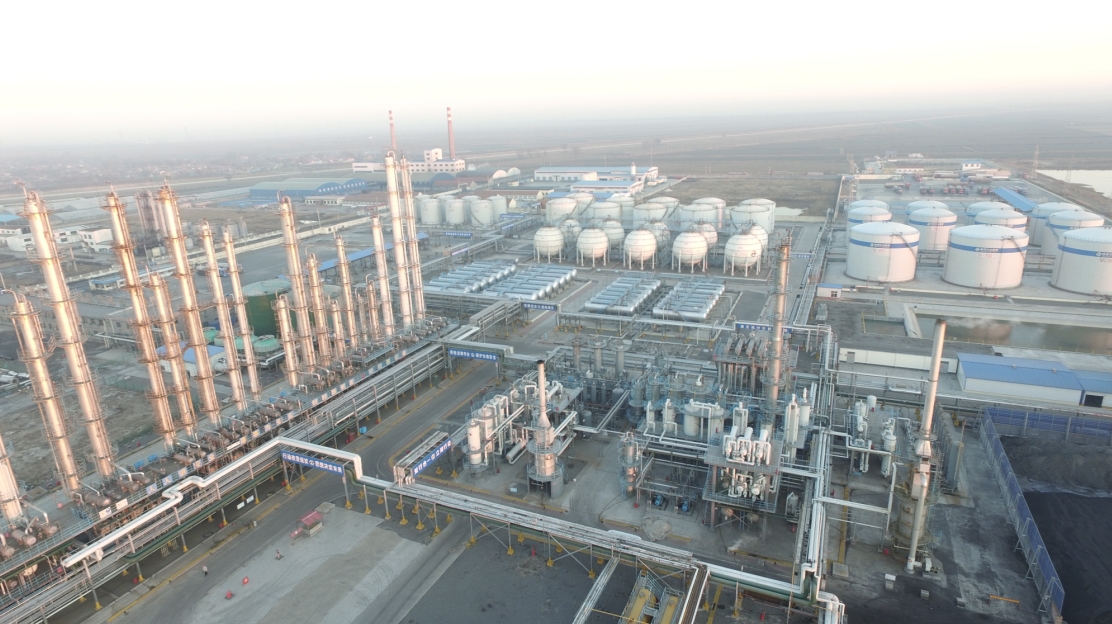
Junyuan Petroleum Group, one of the largest pentane production bases in China.

Polyethylene is the most popular plastic substance in the world
Nowadaysplants use ethylene to create these products
During its gas phaseliquid Isopentane will be added to the gas stream

Pentane: What Is It and How Do We Use It?

Pentane is an organic substance. It can be used to describe any 3 structural isomers or their combination. But, according to IUPAC, this phrase is exclusive to the n-pentane isomer. We also differentiate neopentane or dimethylpropane as well as isopentane or methylbutane.

​Pentanes are commonly used for fuels, but they can also be utilized as solvents in labs. The substance carries similar traits as hexanes and butanes.

Pentanes are generally used for insulation products. However, you can utilize them in so many different ways. Whether you’re relying on n-pentane, cyclopentane, or iso-pentane, each one of the chemical compounds can serve as the main ingredient for various products. In this article, we will discuss pentane, in general, as well as its potential application.

How do we get pentanes?

Pentanes are saturated hydrocarbons. Each one of them has five carbon atoms. We get n-pentane and iso-pentane naturally from crude oil.

They are made during gas production as natural byproducts. On the other hand, cyclopentane is found in naphtha or crude petrol. It is a molecule in the shape of a ring, and it is very popular across several industries. Oil refineries create cyclopentane through the cracking process.

Naphtha has variable quantities of pentanes. It all depends on its origin, the acquiring process, and the construction of the refinery.

They are the first hydrocarbons to become liquids at room temperature. Out of these substances, iso-pentane has the lowest boiling point.

The substance will boil at 29 degrees Celsius compared to n-pentane, which boils at 35 degrees, and cyclopentane that has a boiling point of 49 degrees Celsius. Due to these differences between pentanes’ boiling points, you are able to separate the substances.

What are the main differences between pentane types?

As you can presume, there are some major differences between these substances aside from their boiling points. Companies use them in numerous ways, and they have some major advantages over other crude oil derivatives. What’s even better is that you can mix these chemicals. This is how we get pentane blends, each with its unique set of traits.
How do you use n-pentane?

Generally speaking, n-pentane and iso-pentane are somewhat similar substances. They react in a similar fashion when you use them for different products. Usually, n-pentane is utilized as a refrigeration or air conditioning substance, effectively replacing things such as fluorinated hydrocarbons and ammonia. Here are some of its potential uses:

Refrigerant R601
Very non-polar solvent
Process medium for polyethylene

How do you use iso-pentane?
​A great thing about iso-pentane is that it almost cannot be dissolved in water. Furthermore, it has very soluble when used with other organic solvents like ethers, esters, paraffins, chlorinated hydrocarbons, aromatics, etc. Also, the substance has unlimited miscibility. This gives iso-pentane high versatility. Companies try to utilize their characteristics as much as possible for various products.

Non-polar solvent with high volatility
Personal care products like shower gels
It can be used as a process medium for polypropylene and polyethylene
Working medium in geothermal plants
How do you use cyclopentane?
While the previous two substances may have certain similarities, cyclopentane is completely different from both of them. It is not that popular as a solvent, nor is it used as an ingredient for other chemicals. But, it is a very common substance for insulation products.

It can be used for solvents and insulation board
Cyclopentane is great for refrigeration and refrigeration logistics
Blowing agent for polyurethane foams
Fine chemicals
Different ways pentane is used across various industries
Pentanes are very flexible products. Each one of these subtypes has a wide range of applications. Here is how different industries rely on them for their day-to-day business:

Geothermal plants
Pentanes are very important for renewable energy creation. Geothermal plants use iso-pentane as a medium during their crucial heating processes. Plants extract heat from the ground and use it for heating energy; iso-pentane is there to facilitate the process.

Cooling substance
Companies are also using pentanes as cooling agents. Whether we’re talking about iso-pentane or n-pentane, both of these chemical compounds can be utilized as cooling substances for air conditioning appliances and refrigeration systems. They are a much better alternative to fluorinated hydrocarbons and ammonia.

Cosmetics and care products
Pentanes are also very famous for their cosmetic industry application. They are a crucial ingredient for products like shower gels and shaving creams. Furthermore, these substances are the main reasons why personal care items have their specific, creamy texture.

Companies use pentanes for the production of polypropylene and polyethylene
Among others, companies use these substances to create polyethylene and polypropylene. Polyethylene is the most popular plastic substance in the world. Nowadays, plants use ethylene to create these products. During its gas phase, liquid iso-pentane will be added to the gas stream. The substance works as a specific cooler. Once it is condensed, you can reuse it. We make polypropylene in a similar way as polyethylene, and once again, iso-pentane is added during the gas phase to facilitate the process.

Insulation materials
Pentanes are commonly used for the creation of polystyrene and polyurethane insulation boards. Companies use them as blowing agents during polyisocyanurate and polyurethane formulation. Insulation materials are very important for the food industry and household appliances. You can use them for freezers, refrigerators, and cold storage. They are also crucial for constructions and various others industries. For example, you can use them for building, pipes, and other materials.

Cyclopentane is great for long-lasting insulation. It is especially good for smaller surfaces and spaces due to its ability to stay within polyurethane and polyisocyanurate foam for a long time, even after foaming. The pentane can be used for cooling devices and thin insulation panels.

Packaging material
Among others, pentanes are important for the creation of packaging material. Once again, pentane is utilized as a blowing agent. We use it to create extruded polystyrene, which is later on utilized for packaging chips.

Pentanes have numerous applications. As long as you use them with care, you should be able to create some incredible materials that can be utilized in various industries.

Pentanes Used For Geothermal Power Plants

Processes and applications
Binary Cycle Geothermal Plant Organic Rankine or Kalina Cycle
Binary cycle processes are quite frequent nowadays to make use of the medium enthalpy hydrothermal resources available in the underground. A secondary working fluid having a flashing point at much lower temperature is heated-up by the hydrothermal resource and then expanded in a thermal turbine to drive an electric generator.

Binary Cycle Geothermal Plant Organic Rankine or Kalina Cycle
A binary cycle plant transfers heat from the hot geothermal fluid (105°C < T < 185°C) that is sent through a heat exchanger to vaporize a secondary working fluid such as pentane, iso-butane in the Organic Rankine Cycle, or ammonia in the Kalina Cycle. The working fluid is then expanded in a turbine, condensed and reheated in a closed loop cycle. The brine is disposed of by re-injection into the ground. The system supports these processes with Production pumps (PP), Brine Re-Injection pumps (BRIP), Hydrocarbon Feed pumps (HFP), Cooling Water pumps (CWP) and auxiliary pumps.

A simple Kalina cycle includes a waste heat recovery vapor generator, a turbine, and the distillation condensation system. In the distillation condensation subsystem, first the flow incoming from the turbine is cooled by the heater (recuperator), and then the stream is mixed with a lean solution of ammonia to increase the condensation temperature of the working fluid.

The Kalina cycle is a modified Rankine cycle involving mixtures of ammonia and water of varying concentration, that offers higher performance for temperatures between 200 and 300 °C. It is being pursued commercially and also targeted at geothermal power applications.

Isopentane – ( i-C5H12 )

Colorless liquid with a gasoline-like odor. Floats on water. Flammable, irritating vapor is produced.

Specifications 
Purity , %99
(Liquid Phase)(Vol. %)
Other Impurities
Ship
DOT Shipping Name Isopentane
DOT Classification3
DOT Label Flammable , Liquid 
UN Number UN1265
CAS No.78-78-4
Technical Information
Cylinder State @ 21.1°C Liquid 
Flammable Limits In Air 
Auto Ignition Temperature (°C )
Molecular Weight (g/mol)72.15
Specific gravity (air =1)2.48
Critical Temperature ( °C )
Critical Pressure ( psig )
Applications
Isopentane is used in a closed loop  in geothermal power production to drive turbines.

N-pentane – ( n-C5H12 )

A clear colorless liquid with a petroleum-like odor. Flash point 57°F. Boiling point 97°F. Less dense than water and insoluble in water. Hence floats on water. Vapors are heavier than air. 

Specifications 
Purity , %99
(Liquid Phase)(Vol. %)
Other Impurities
Ship
DOT Shipping Name Pentane
DOT Classification3
DOT Label Flammable , Liquid 
UN Number UN1265
CAS No.109-66-0
CGA/DISS /BS341/DIN477510/NO.4/NO.1
Technical Information
Cylinder State @ 21.1°C Liquid
Flammable Limits In Air 1.4-7.8%
Auto Ignition Temperature (°C )260
Molecular Weight (g/mol)72.15
Specific gravity (air =1)2.491
Critical Temperature ( °C )196.5
Critical Pressure ( psig )473.93
Applications
·Pentanes are some of the primary blowing agents used in the production of polystyrene foam and other foams. Usually, a mixture of n-, i-, and increasingly cyclopentane is used for this purpose.
·Because of its low boiling point, low cost, and relative safety, pentane is used as a working medium in geothermal power stations. It is added into some refrigerant blends as well.
·Pentanes are also used as an active ingredient in some pesticides.

Junyuan Petroleum Group is a renowned business entity, engaged in manufacturing and supplying of a wide range of Solvents and Chemicals. We offer the clients with n-Pentane, Isopentane, Pentane Blends, n-Hexane, Isohexane, n-Heptane, n-Octane and D solvents.

For a price quote or sales questions please send an email with your request to info@junyuanpetroleumgroup.com or call us at +8617810300898 (WhatsApp).

Key Takeaways

  • Binary Cycle Geothermal Plants utilize pentanes as working fluids to convert geothermal energy into electricity.
  • Isopentane and n-pentane serve essential roles in geothermal power production, driving turbines effectively.
  • Pentanes, due to their low boiling points and safety, are also used in refrigerants and as blowing agents in foams.
  • Junyuan Petroleum Group manufactures a range of solvents, including n-Pentane and Isopentane, for various applications.
Home » CUSTOM TITLE » pentane » Page 13

Blowing Agent

A blowing agent is a substance which is capable of producing a cellular structure via a foaming process in a variety of materials that undergo hardening or phase transition, such as polymers, plastics, and metals. They are typically applied when the blown material is in a liquid stage. The cellular structure in a matrix reduces density, increasing thermal and acoustic insulation, while increasing relative stiffness of the original polymer.

Blowing agents are additives used in the manufacture of foamed plastics, which have the advantage of lightness, contribute to material and cost savings, and are distinguished by the fact that they are thermally insulatingBlowing agents usually create fine and regular cellular structures during polymer processing.

Blowing agent plays a fundamental role in the production of polystyrene (PS), polyurethane (PUand polyisocyanurate (PIRinsulations foamA small quantity of blowing agent indirectly provides important performance characteristics to these foams as great thermal insulation properties.

The global warming potential (GWP) of the blowing agents used to manufacture insulation products like polyiso insulation can be an important consideration when assessing each product’s environmental impacts. Blowing agents function to increase the final thermal resistance or R-value of foam insulation, and also help to facilitate the manufacturing or foaming process.  

Manufacturers of laminated insulation products in North America use #pentane or #pentane #blends in their production processes. Pentane is a hydrocarbon with zero ozone depletion potential (ODP) and low-GWP. Manufacturers have utilized pentane technologies in product formulations for over 20 years.

n-Pentane, isopentane and pentane blends storage tanks at our manufactuiring plant

Pentane has a GWP value of less than 10, which means that insulation products produced and sold in North America comply with climate regulations that limit the manufacture or installation of products produced with higher-GWP substances (including products manufactured with hydrofluorocarbons (HFCs) or blends thereof). Therefore, architects and contractors can continue to specify insulation products manufactured by PIMA members with confidence in both the industry’s performance and environmental scorecard.

Blowing agents can allow the polymer processor to achieve weight reduction and use less raw materials by introducing a finely controlled cell structure within the polymerWith the endothermic blowing agentsas part of their functionalitythey will absorb heat energy from their surroundings.

Foam blowing agents encompass a wide variety of applications including refrigeratorsbuildingsautomobilesfurniturepackagingand many moreThe blowing agent is used to create a cellular structure from liquid plastic resinand in the case of foam used for insulation it functions as an insulating component of the foam.

When it comes to blowing agents, a controlled foam structure makes your production process go a lot smoother

Not only do blowing agents expand up to 60 times in volume, they also provide:

  • highly controlled foaming
  • closed, uniform cell structure
  • guards against water penetration
  • create internal pressure to combat shrinkage.

Blowing agent plays a fundamental role in the production of polystyrene (PS), polyurethane (PUand polyisocyanurate (PIRinsulations foamA small quantity of blowing agent indirectly provides important performance characteristics to these foams as great thermal insulation properties.

Blowing agents can allow the polymer processor to achieve weight reduction and use less raw materials by introducing a finely controlled cell structure within the polymerWith the endothermic blowing agentsas part of their functionalitythey will absorb heat energy from their surroundings.

What is EPS

Polystyrene is one of the most widely used kinds of plastic. It is a polymer made from the monomer styrene, a liquid hydrocarbon that is commercially manufactured from petroleum by the chemical industry. Polystyrene is a thermoplastic substance, it melts if heated and becomes solid again when cool.

Polystyrene is most commonly found in three forms. Rigid Polystyrene (PS), Expanded Polystyrene (EPS) and Extruded Polystyrene (XPS).

Rigid polystyrene has many applications including disposable cutlery, cd cases, video/casette casings, components for plastic model toys as well as some margarine and yoghurt containers.  Extruded polystyrene foam has good insulating properties making it important as a non-structural construction material.  XPS is sold under the trademark Styrofoam by Dow Chemical, however this term is often used informally for other foamed polystyrene products.

How to produce foam?

Expandable Polystyrene / EPS:

This is PS Foam that uses Pentane gas (C5H12) as the blowing agent. During the material production process called “Polymerisation” the polystyrene resin granules impregnated with the blowing agent. EPS production processes begin in the pre-expansion process where the EPS bead will expand by the heat of steam usually 50 times in volume. The next step in the process is moulding process where expanded foam bead will be heated again with steam then they expand further until they fuse together, forming as foam products.

Expandable Polystyrene / EPS:

There are mainly 2 types of EPS moulding machines;

  • Shape moulding machine that produce various shapes of foam products according to the molds such as icebox, helmet and packaging foam.
  • Block moulding machine that produce block foam and sheet foam Expanded EPS foam bead contains 98% air per volume, only 2% is plastic. This make EPS foam very light weight, has low thermal conductivity because air is the best insulation, high compressive strength and excellent shock absorption. These properties make EPS to be ideal material for packaging and construction.

Polystyrene Paper (PSP):

This is a PS Foam which is produced by extruding process as another plastic. Production process start when put polystyrene resin pellets into the extruder that heated by electric. Foaming process occur at the end of extruder where the blowing agent, butane (C4H10) gas react with the melt plastic then become foam. The melted polystyrene foam is then extended as sheet then rolled as paper roll, that is why it is commonly known as “Polystyrene Paper”. The polystyrene foam sheet or polystyrene paper can be produced as many shape according to the mould by thermal forming process such as food tray, cups, bow, and food box.

There’s no any CFC’s in PS foam

Both EPS and PSP contain 95 -98 % air another 2-5% is polystyrene which is pure hydrocarbon. CFC’s is Chlorofluorocarbons which is totally different in its chemical structure from polystyrene. CFC’s has very low blowing point and uneasy to be maintained in EPS beads. Therefore, EPS Foam never use CFC’s at any stage of its production. The blowing agent used since EPS Foam was first introduced in 1952 by BASF  is Pentane gas which, does not contain any chlorine atoms as CFC’s. PSP Foam in the beginning used CFC’s as blowing agent. In the past two decades CFC’s are gradually phased out from plastics and refrigerator industries. PSP moulders in Thailand already use Butane (C4H10) as the blowing agent since the last 15 years. Butane gas is the gas that we use at home for cooking. The blowing agents that use in producing PS Foam are Pentane and Butane, which are pure hydrocarbon as polystyrene. They belong to the same chemical family, the paraffin series as methane, ethane, and propane gas.

How to manage the EPS foam waste

Apart from recycling by melting and compacting, there are many ways to manage the EPS waste as the followings:

  • Crush in to small particle and mix with soil. Foam waste will improve ventilation in the soil, organic substances in the soil will become easier the humus.
  • Mixing the crushed bead with cement to reduce the weight and increase insulation properties.
  • Combustion at 1000 C with sufficient air supplies in to generate heat. Burning EPS require no any additional fuel, in fact EPS can replace the fuel normally required for combustion, l kg of EPS saves 1 kg = 1.2 – 1.4 Litre of fuel oil.

The Recycling of PS:

Since both EPS and PSP Foam are made of Polystyrene, which is thermoplastic, so that it will become again a polystyrene plastic when recycled. AMEPS members recycle both EPS and PSP Foam by first crushing into small particle then melting or compacting it. Melting can be done by heated roller, disk or screw extruders, where the regrind scraps is heated usually by electrical power for some time above the melting temperature. Compacting can be done by rotary compactors where pressure and frictional force create heat below melting temperature to soften the regrind scraps for only few seconds. This method also called “agglomeration”.PS pallet from recycled foam will be produced in various kinds of plastic products e.g. video and tape cassette and ruler. The other way to reuse EPS Foam is to mix the regrind beads with the new expanded bead for re-production in moulding process.

Why Pentane in Geothermal?

  • Primarily, pentane is used to create a blowing agent which is then used to create a foam known as polystyrene. Polystyrene is used to make insulation materials for refrigerators and heating pipes. As well, pentane is used in geothermal power stations as a binary fluid, due to its low boiling point (36 o C).
  • Boiling Point: 36oC
  • Formula: C₅H₁₂
  • Melting Point: -130oC
  • Molar mass: 72.15 grams/mole

Geothermal power generation must operate with whatever temperature is found in a particular well. Water and steam work well at high temperatures. At lower temperatures, a “binary system” may sometimes provide better efficiency.

In a binary system, the hot fluid from the geothermal source is used to heat a second, lower boiling point fluid (in this case, pentane) to convert it to gas and drive a turbine. The nature of pentane allows the whole cycle (fluid to gas, drive the power generation turbine, and condense to fluid) to take place efficiently at a lower temperature.

At this location, a binary system is being used to squeeze additional power from the hot condensate leaving a primary water/steam turbine. Using an additional set of heat exchangers this energy is captured to heat low boiling point pentane and to drive an additional turbine. The pentane system harnesses more of the energy brought out of the ground.

Like getting something for nothing.

A gravity-dominated process for recovering bitumen

An integrated thermal recovery process using a solvent of a pentane or hexane or both as an additive to, or sole component of, a gravity-dominated process for recovering bitumen or heavy oil from a reservoir. A pentane-hexane specific solvent fraction is extracted at surface from a diluent stream. That pentane-hexane solvent fraction is then injected into the reservoir as part of a gravity-dominated recovery process within the reservoir, and when that solvent fraction is subsequently produced as part of the oil or bitumen blend, it is allowed to remain within the blend to enhance the subsequent blend treating and transportation steps. Meanwhile, the remainder of the diluent from which the solvent stream had been extracted is utilized at surface as a blending stream to serve as an aid in treating of produced fluids and also to serve as a means of rendering the bitumen or heavy oil stream pipelineable.

An integrated thermal recovery process using a solvent of a pentane or hexane or both as an additive to, or sole component of, a gravity-dominated process for recovering bitumen or heavy oil from a reservoir. A pentane-hexane specific solvent fraction is extracted at surface from a diluent stream.
Author: Subodh Gupta, Simon D. Gittins, Mark A. Bilozir
Cited by: 22
Publish Year: 2012

Is pentane a polar solvent?Pentane is a straight chain alkane consisting of 5 carbon atoms. It has a role as a non-polar solvent and a refrigerant. It is a volatile organic compound and an alkane.

Is pentane an alkane or alcohol?Pentane is found in alcoholic beverages. Pentane is present in hop oil. Pentane is any or one of the organic compounds with the formula C5H12. This alkane is a component of some fuels and is employed as a specialty solvent in the laboratory. Its properties are very similar to those of butane and hexane.

Is pentane an organic compound?It is a volatile organic compound and an alkane. Pentane is found in alcoholic beverages. Pentane is present in hop oil. Pentane is any or one of the organic compounds with the formula C5H12. This alkane is a component of some fuels and is employed as a specialty solvent in the laboratory.

n-Pentane, CAS 109-66-0

In addition to being a component of natural gas, pentane has numerous industrial uses. Primarily, pentane is used to create a blowing agent which is then used to create a foam known as polystyrene. Polystyrene is used to make insulation materials for refrigerators and heating pipes.

Pentane is an organic compound which is a clear colourless liquid. The odour of pentane is similar to petroleum. It is less dense than the water and is insoluble in water. It is also known as quintane and n-pentane. The rotatable bond count of pentane is 2.

Molecular formula C5H12

Linear formula CH3(CH2)3CH3

The Simplified molecular-input line-entry system (SMILES) CCCCC

Properties Of Pentane
The properties of pentane are similar to butane and hexane. Following is the table of properties of pentane:

IUPAC name pentane
Molecular formula C5H12
Molecular mass 72.151 g/mol
Melting point -130.5 to -129.1℃
Boiling point 35.9 to 36.3℃
Density 0.626 g/mL
Appearance Colourless liquid
Refractive index 1.358
Viscosity 0.240 mPa.s at 20℃

Isomers Of Pentane
There are three structural isomers of pentane and they are:

n-pentane is the first isomer which is a straight chain with a normal structure of pentane.
2-methylbutane is the second isomer which is a branched-chain structure in which one carbon atom is connected to three other carbon atoms.
2,2-dimethylpropane is the third isomer which is a branched-chain structure in the central carbon atom is connected to four other carbon atoms.
Uses Of Pentane
It is used in the production of polystyrene foam.
Isopentane which is obtained by acid-catalysed isomerisation is used in producing high-octane fuels.
It is used in geothermal power stations as a working medium in Rankine cycle.
It is also used in liquid chromatography.
At room temperature, pentanes are volatile liquid and inexpensive. They are used as a laboratory solvent.
To learn more about Chemistry related concepts, stay tuned with Junyuan Petroleum Group

n-Pentane, 95% and 99% Pure

These 95% and 99% CP (chemically pure) n-Pentane (by Junyuan Petroleum Group ) are of purity suitable for use in general applications as a non-polar solvent. n-Pentane is a relatively light, straight, five-membered alkane useful for extraction and is easily evaporated and recovered.

These products are shipped in a 125kg drum or 14.5MT ISO Tank.

CONTAINS

C5H12 CAS No. 109-66-0 MW 72.15

TEST SPECIFICATION

Appearance: Colorless
Assay (by GC): min 95.0%
Water (H2O): max 0.02%

Balances are calibrated regularly with weights certified traceable to the NIST national mass standard. All products are prepared according to master documents that assure manufacture according to validated methods. Batch records document traceability and production history for each lot manufactured.

The Certificate of Analysis is designed to comply with ISO Guide 31 “Reference Materials — Contents of Certificates and Labels.”

n-Pentane
n-Pentane