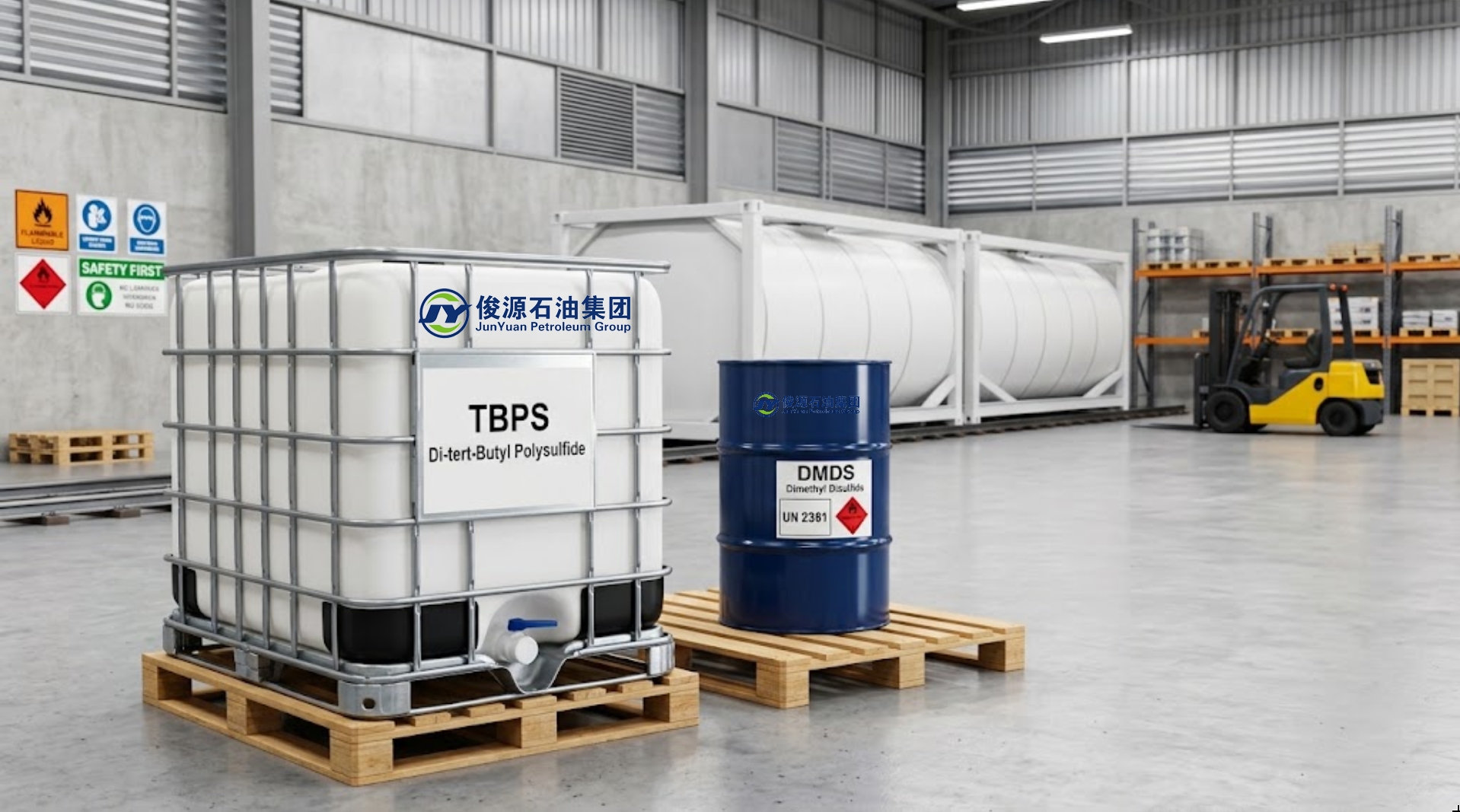
Sulfiding agents convert oxidized catalyst metals into their active sulfide form ahead of refinery hydrotreating, hydrocracking, and steam cracking operations. Without proper sulfiding, in fact, hydroprocessing catalysts cannot reach the activity levels needed for efficient desulfurization and denitrification. Overall, this product line covers the two most widely used organosulfur sulfiding agents in the refining industry: TBPS and DMDS.
TBPS vs. DMDS: Choosing the Right Sulfiding Agent
TBPS (Di-tert-Butyl Polysulfide, CAS 68937-96-2) is the newer, lower-odor option gaining ground across hydrotreating and hydrocracking units. Because its flash point sits above 100°C, it carries no special fire-hazard classification. In addition, its milder decomposition profile helps avoid the localized heat spikes that can damage catalyst active sites during startup.
DMDS (Dimethyl Disulfide, CAS 624-92-0), on the other hand, remains the traditional workhorse for catalyst sulfiding. It is valued for its higher total sulfur content (≥68%) and lower unit dosage needs. As a result, it continues to serve refineries that already run a DMDS-based sulfiding protocol.
| Parameter |
TBPS |
DMDS |
| CAS No. |
68937-96-2 |
624-92-0 |
| Total Sulfur Content |
52–56% |
≥68% |
| Flash Point |
≥100°C |
~15°C |
| Odor Profile |
Mild, low-volatility |
Strong, garlic-like |
Either way, both products ship with a factory Certificate of Analysis (COA) and come in flexible packaging — steel drums, IBC totes, or ISO tank containers — to match trial orders and continuous plant supply. As China’s largest manufacturer of pentanes, hexanes, heptanes, and sulfiding agents, we export to customers in 50+ countries and back every shipment with full technical documentation.