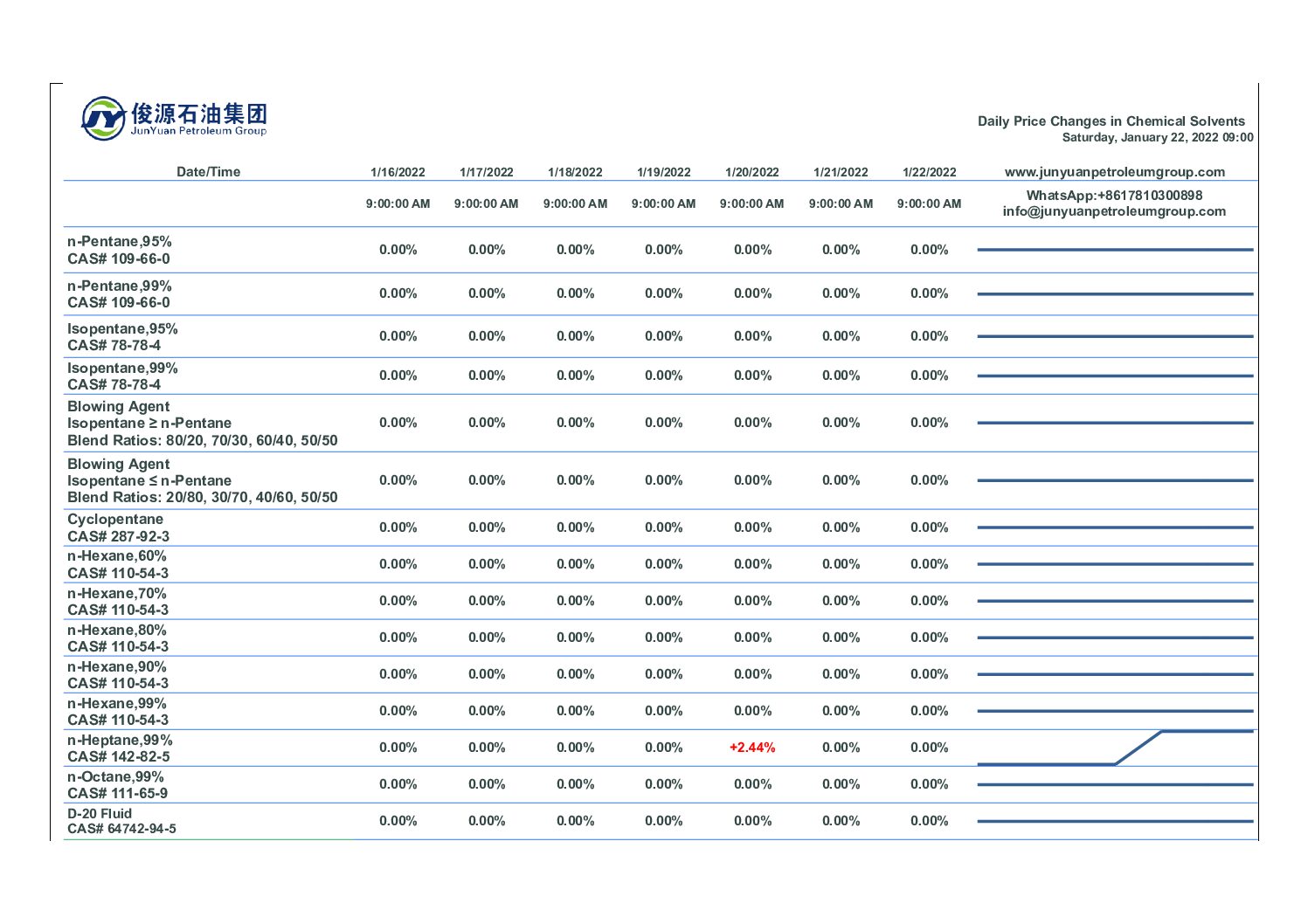
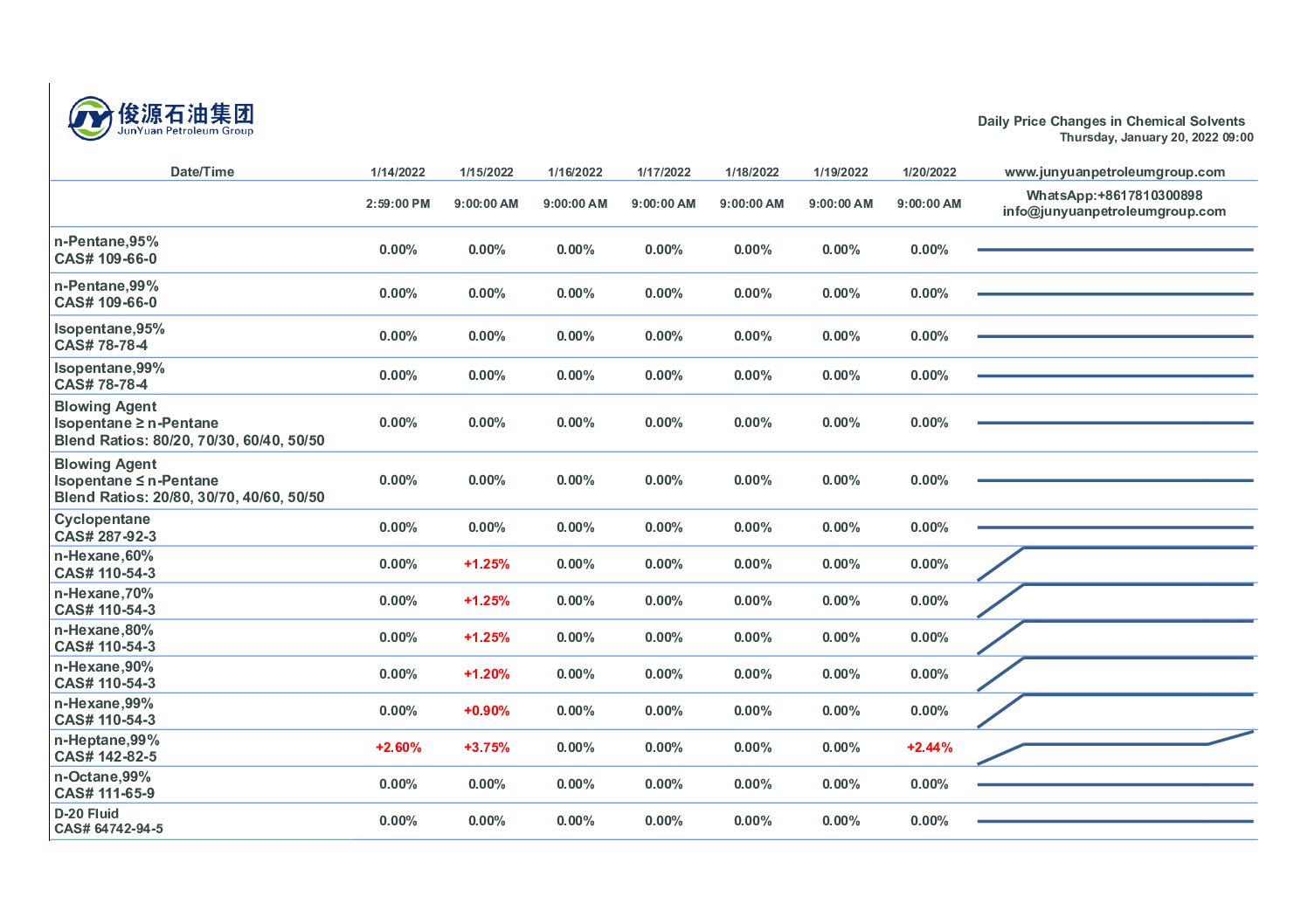
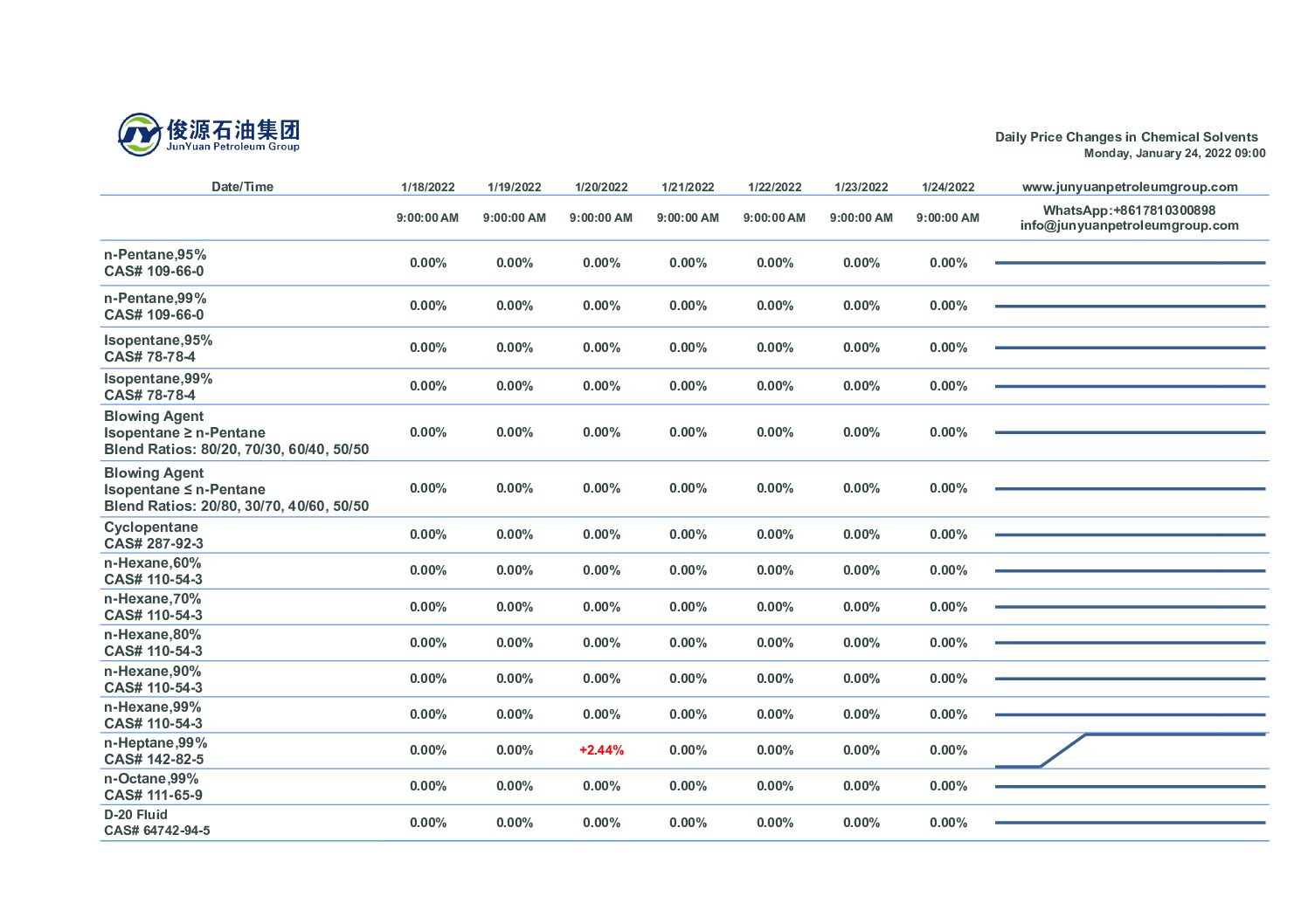
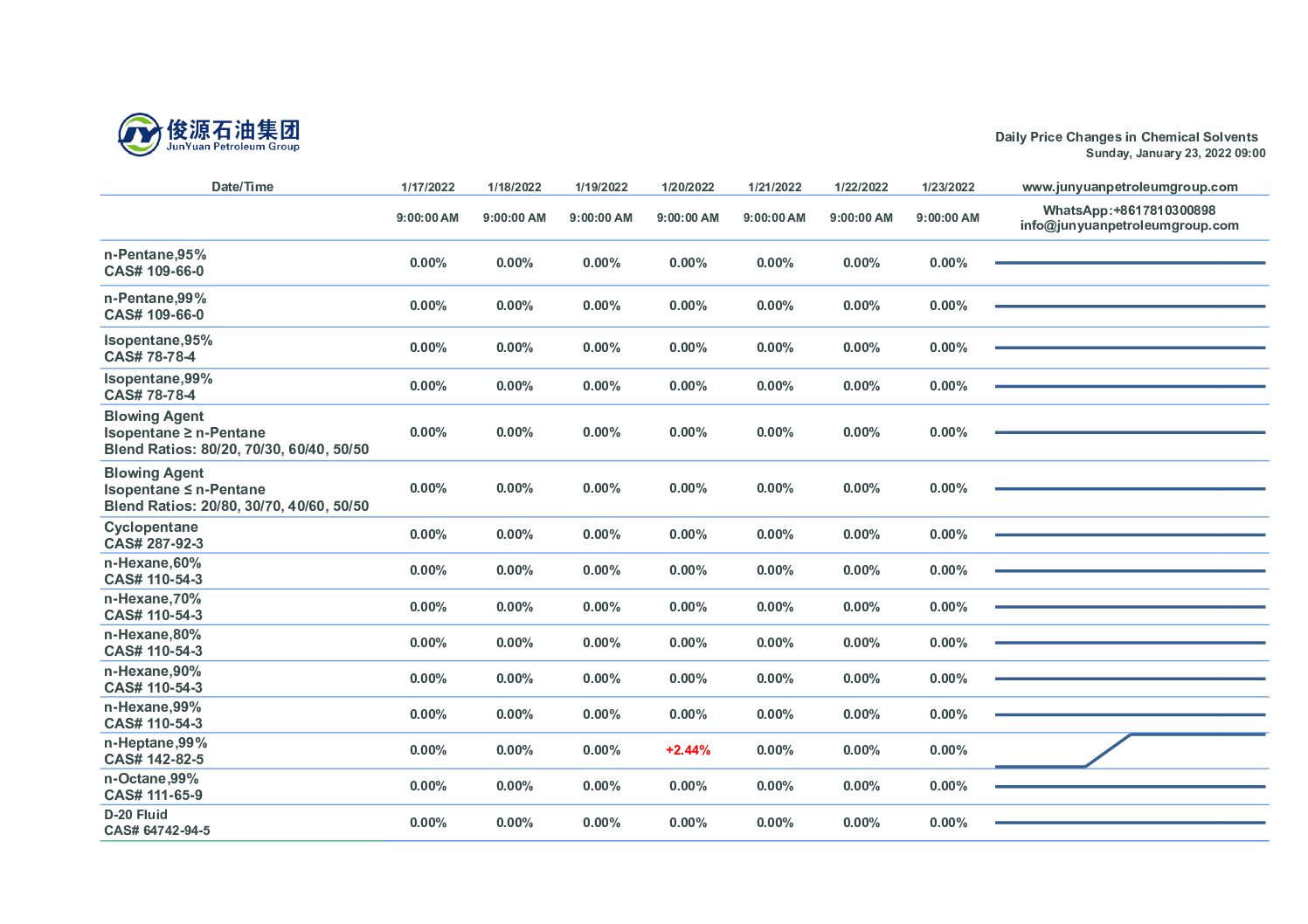
% Change in Product Prices Today.





Polar order of mixed solvents
Benzene: chloroform (1 + 1) → cyclohexane: ethyl acetate (8 + 2) → chloroform: acetone (95 + 5) → benzene: acetone (9 + 1) → benzene: ethyl acetate (8 + 2) → chloroform: ether (9 + 1) → benzene: methanol (95 + 5) → benzene: ether (6 + 4) → cyclohexane: ethyl acetate (1 + 1) → chloroform: ether (8 + 2) → chloroform: methanol (99 + 1) → benzene: methanol (9 + 1) → chloroform: acetone (85 + 15) → benzene: ether (4 + 6) → benzene: ethyl acetate (1 + 1) → chloroform: methanol (95 + 5) → chloroform: acetone (7 + 3) → benzene: ethyl acetate (3 + 7) → benzene: ether (1 + 9) → ether: methanol (99 + 1) → ethyl acetate: methanol (99 + 1) → benzene: acetone (1 + 1) → chloroform: methanol (9 + 1)
Note: benzene: methanol (95 + 5) means that 95 volumes of benzene are mixed with 5 volumes of methanol to form a mixed solvent
Common mixed solvents
Ethyl acetate / hexane: common concentration: 0 ~ 30%. However, it is sometimes difficult to completely remove the solvent on the rotary evaporator.
Ether / pentane system: it is commonly used when the concentration is 0 ~ 40%. It is very easy to remove on the rotary evaporator.
Ethanol / hexane or pentane: 5 ~ 30% is suitable for strong polar compounds.
Dichloromethane / hexane or pentane: 5 ~ 30%, which can be considered when other mixed solvents fail.
Comparison of functional group polarity
Alkanes (- CH3, – CH2 -) < olefins (- CH = ch -) < ethers (- O-CH3, – o-ch2 -) < nitro compounds (- NO2) < dimethylamine (ch3-n-ch3) < lipids (- coor) < ketones (- co -) < aldehydes (- CHO) < mercaptans (- SH) < amines (- NH2) < amides (- nhco-ch3) < alcohols (- OH) < phenols (- ar-oh) < carboxylic acids (- COOH)
Common mobile phase polarity
Petroleum ether < gasoline < heptane < hexane < carbon disulfide < xylene < toluene < chloropropane < benzene < bromoethane < brominated benzene < dichloroethane (DCM) < chloroform < isopropyl ether < nitromethane < butyl acetate < ether < ethyl acetate < n-pentane < n-butanol < phenol < methylethanol < TERT butanol < tetrahydrofuran < dioxane < acetone < ethanol < acetonitrile < methanol < nitrogen dimethylformamide (DMF) < water
Indicates the polarity of an organic solvent, which is related to its physicochemical properties, such as dielectric constant, dipole moment or refractive index. This representation regards all solvents as continuous acting media rather than discontinuous unity composed of various molecules, and does not take into account the special interaction between solvents and solutes.
[slideshow]
Heptane is an organic compound with the chemical formula C7H16. It is colorless and volatile liquid. It is mainly used as a standard for the determination of octane number. It can also be used for the preparation of anesthetics, solvents, raw materials for organic synthesis and experimental reagents.
Pharmaceutical Grade n-Heptane: content > 99%, UN No.: 1206, with colorless, tasteless and non-toxic environmental protection characteristics. Product Applications: This product is mainly used for pesticide intermediates, pharmaceutical intermediates, fine chemicals, etc. it can replace toluene and improve the purity of intermediate products.

Junyuan Petroleum Group is a professional solvent manufacturer with an annual production capacity of 800,000 tons. It is a leading enterprise specializing in the supply of Heptane, n-Heptane, n-Pentane, Isopentane, Cyclopentane, n-Hexane, Blowing Agent, n-Octane, Isohexane, Sodium Methoxide and solvent oil in the Chinese market. In 2022, the market value of n-heptane (CAS 142-82-5) is US $956 million, which is expected to reach US $1137 million by 2024, with a CAGR of 1.18% during the forecast period.
the increasing sea freight has soared 12 times, or set a record!
The shipping company made a huge profit! Global shipping profits may soar 5 times!! In the past year, the global shipping market continued to be hot, international ports were congested, containers were hard to find, and shipping prices continued to soar. For a long time, shipping has been an important part of the international trade and transportation market with its low price However, since the outbreak of the epidemic, the global shipping cost has opened a crazy price increase mode.